Para Mi Hija by Andrew Birk at Galeria Karen Huber, Mexico City
Feburary 4th - April 11th, 2020
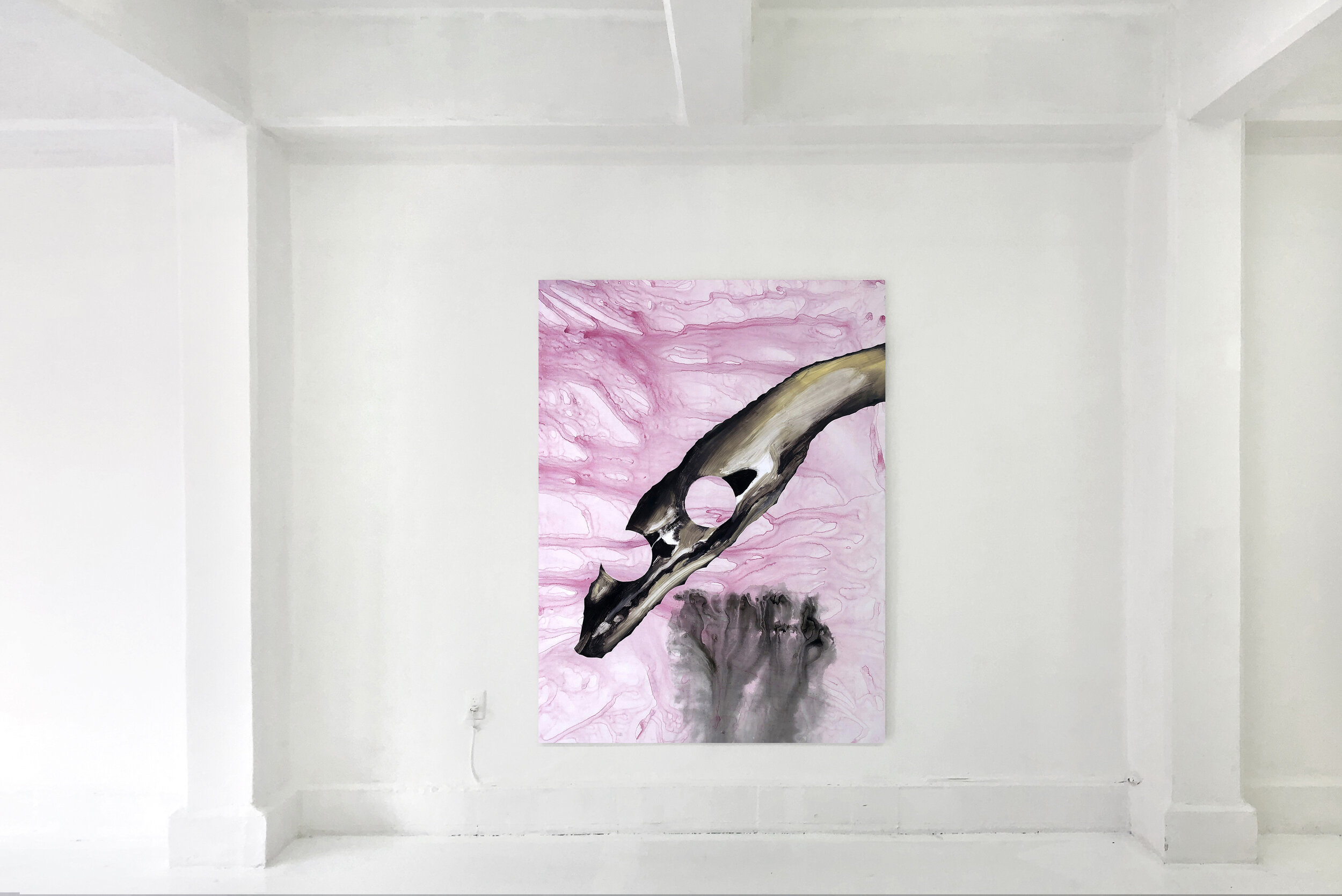
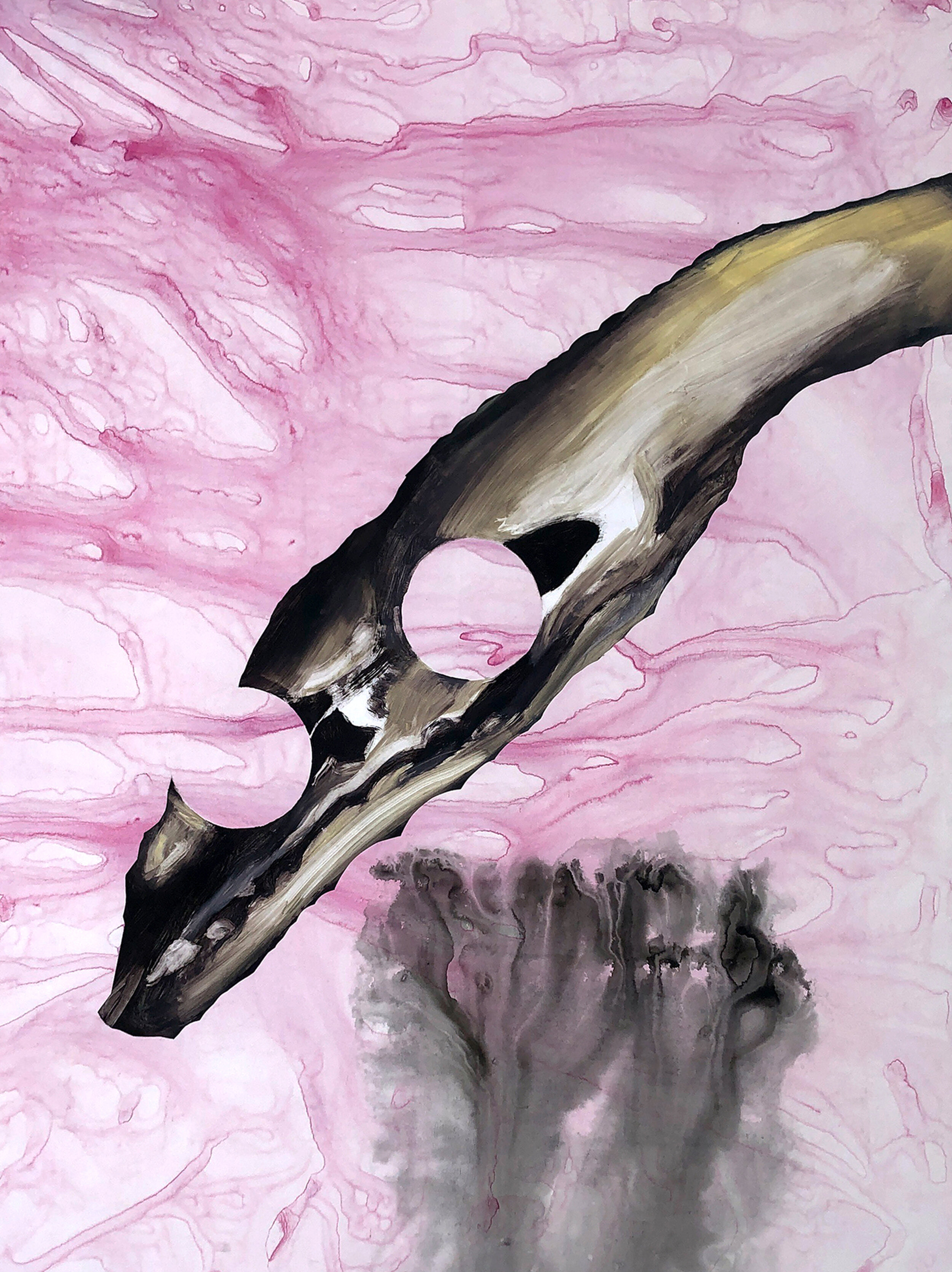
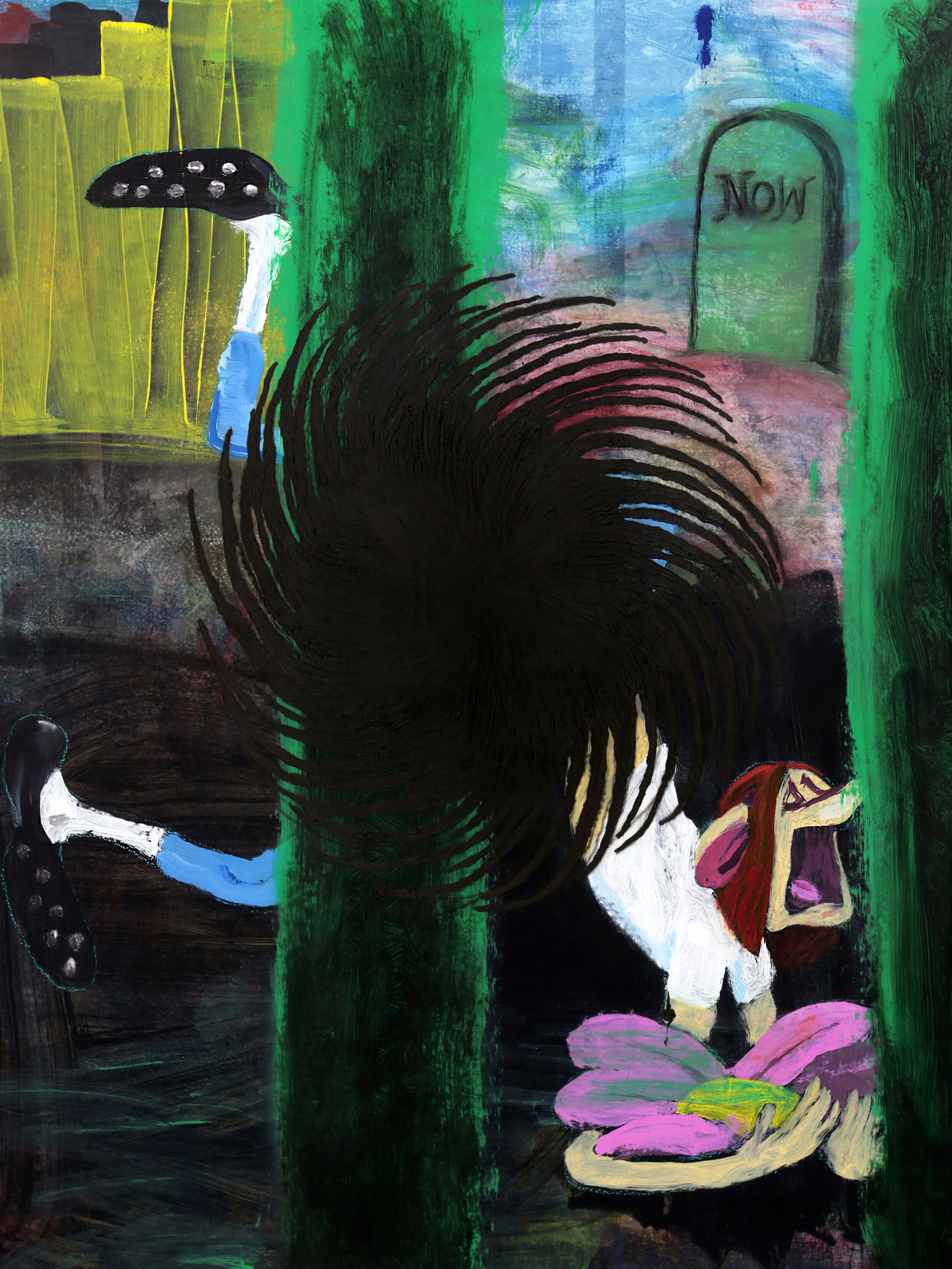
As a child, I remember seeing sundials in family homes or public squares of villages in France. I was fascinated by those ornate instruments with heavenly symbols, as well as by the silhouettes they created on the facades. I had been told that time could be measured through the sun, but at that time I did not understand it very well. The reality is that now I remain confused – this thing of time persists as an entire abstraction. A few weeks ago, I visited Andrew and his family in Catalonia. Upon arriving at his workshop and future home, I noticed a broken sundial, of which only the gnomon remained - the rod that indicates the hours - creating a drawing that cannot indicate the calculated time but create an abstract dance of shadows. In the series of paintings we discover in this exhibition, we also find a dance over time through the reinterpretation of the famous Holbein anamorphosis (The Ambassadors, 1533). This distortion of representation, dual image, blurred or clear as you look, gives us the tone of those works that look like chapters to assemble, mold, compact. What role does uncertainty play as a pictorial construction?
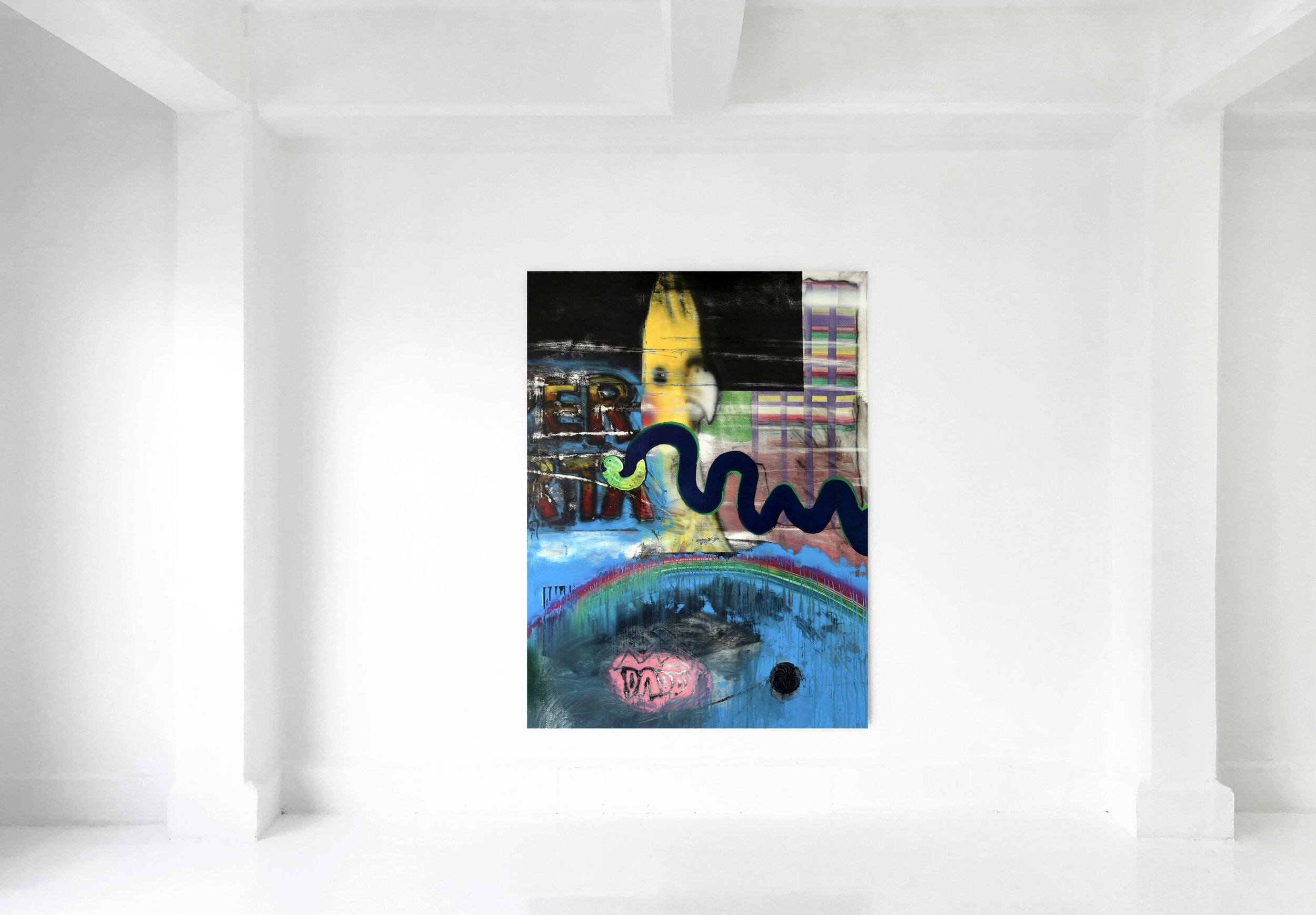
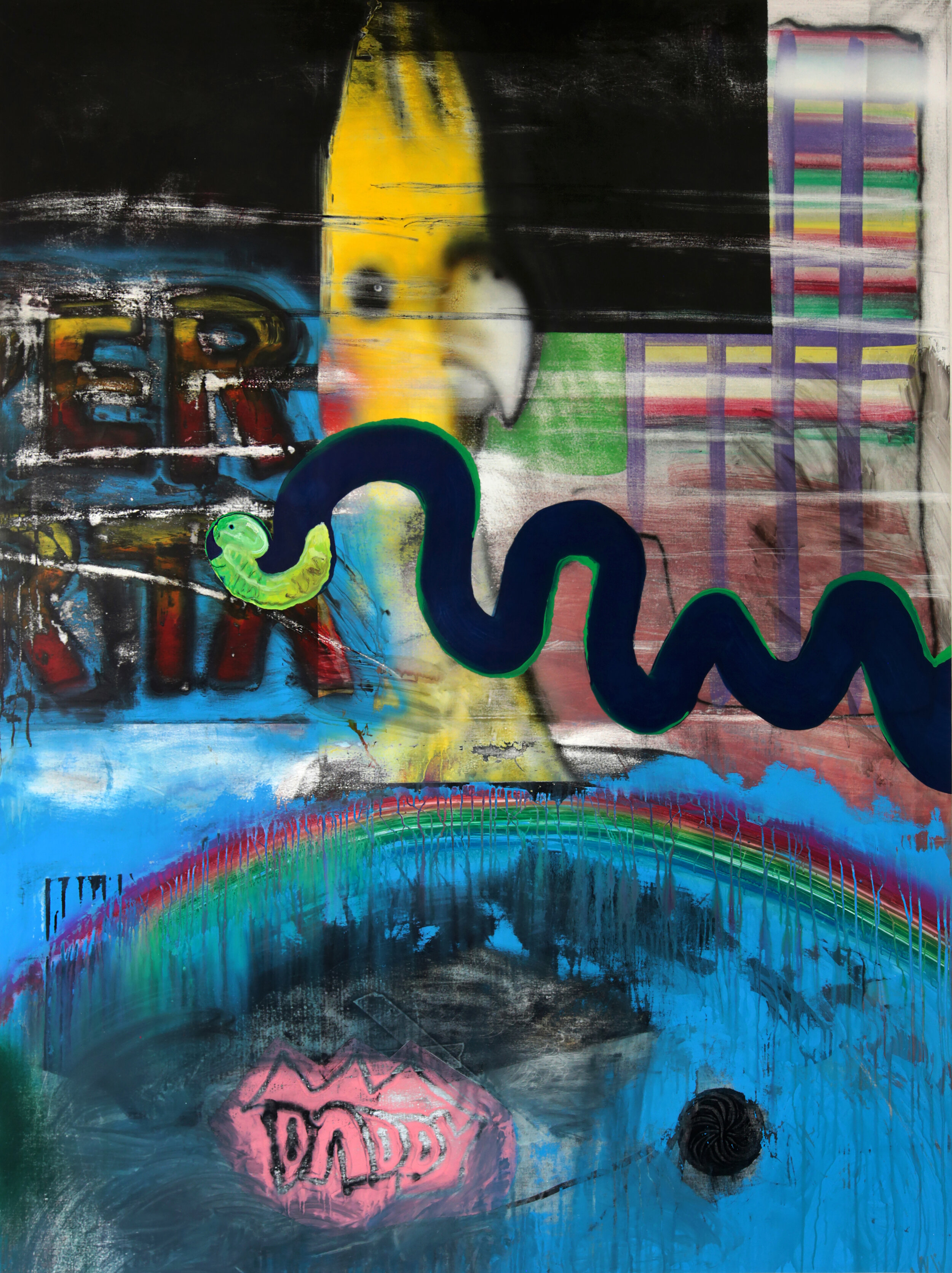
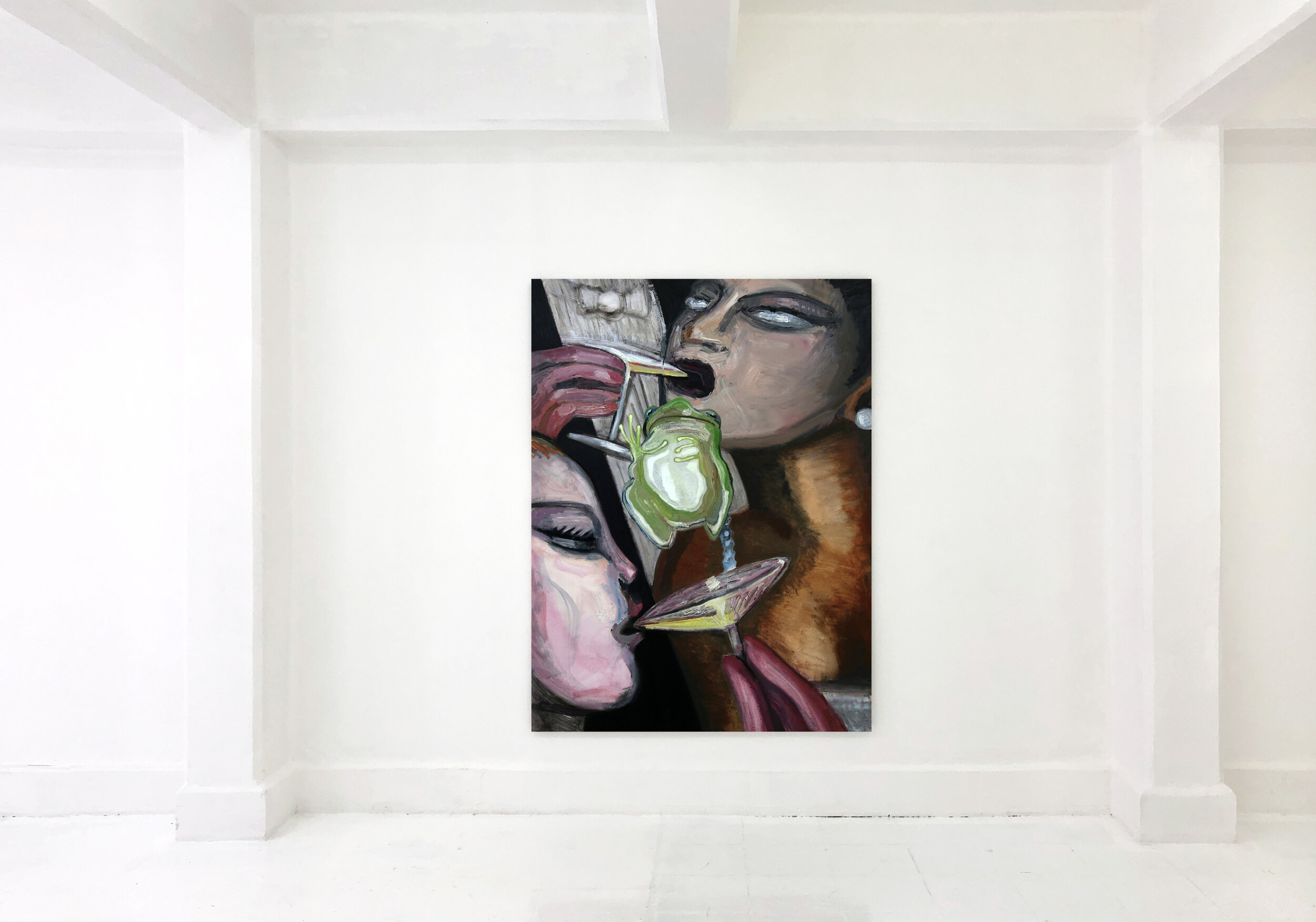
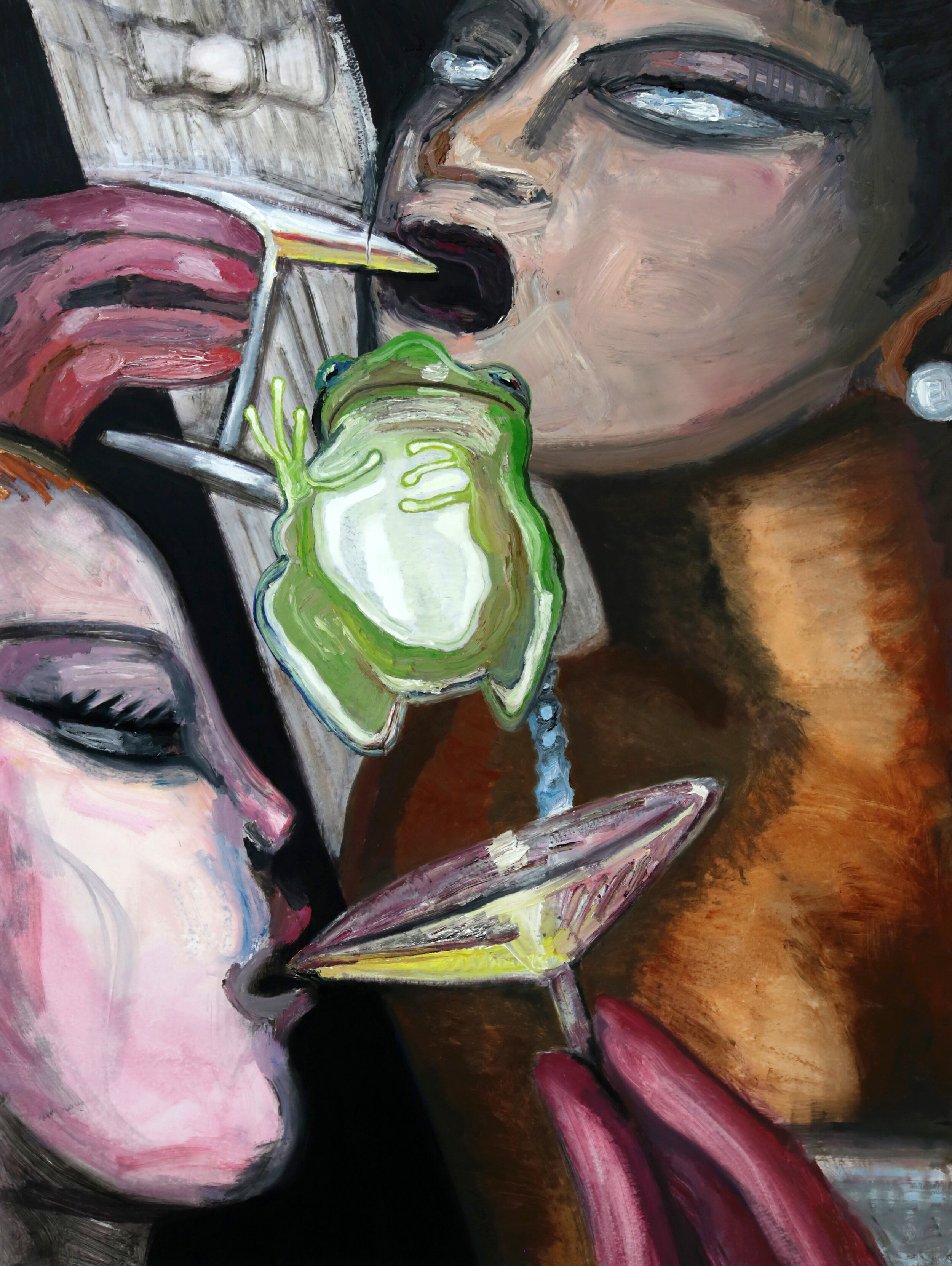
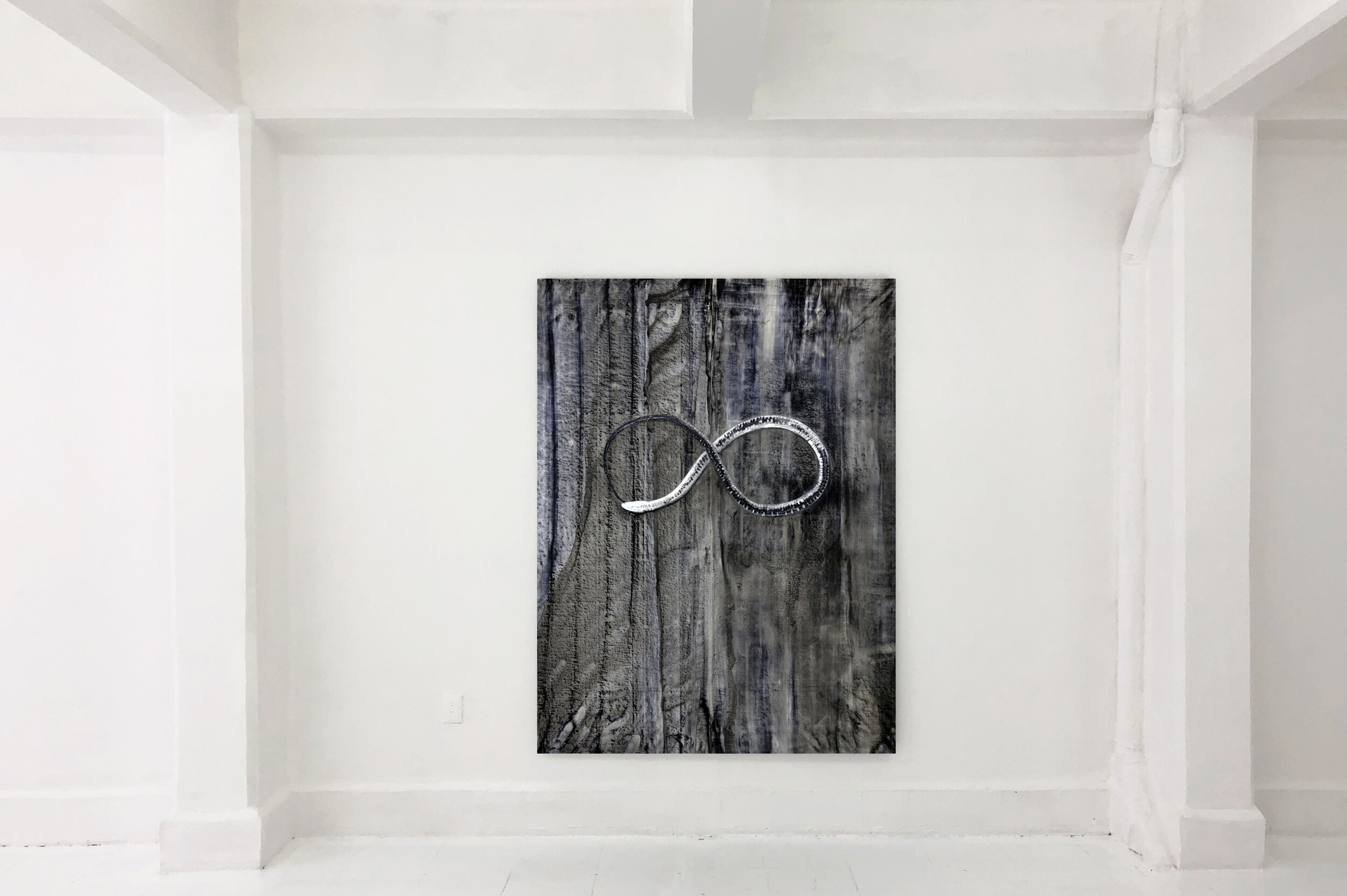
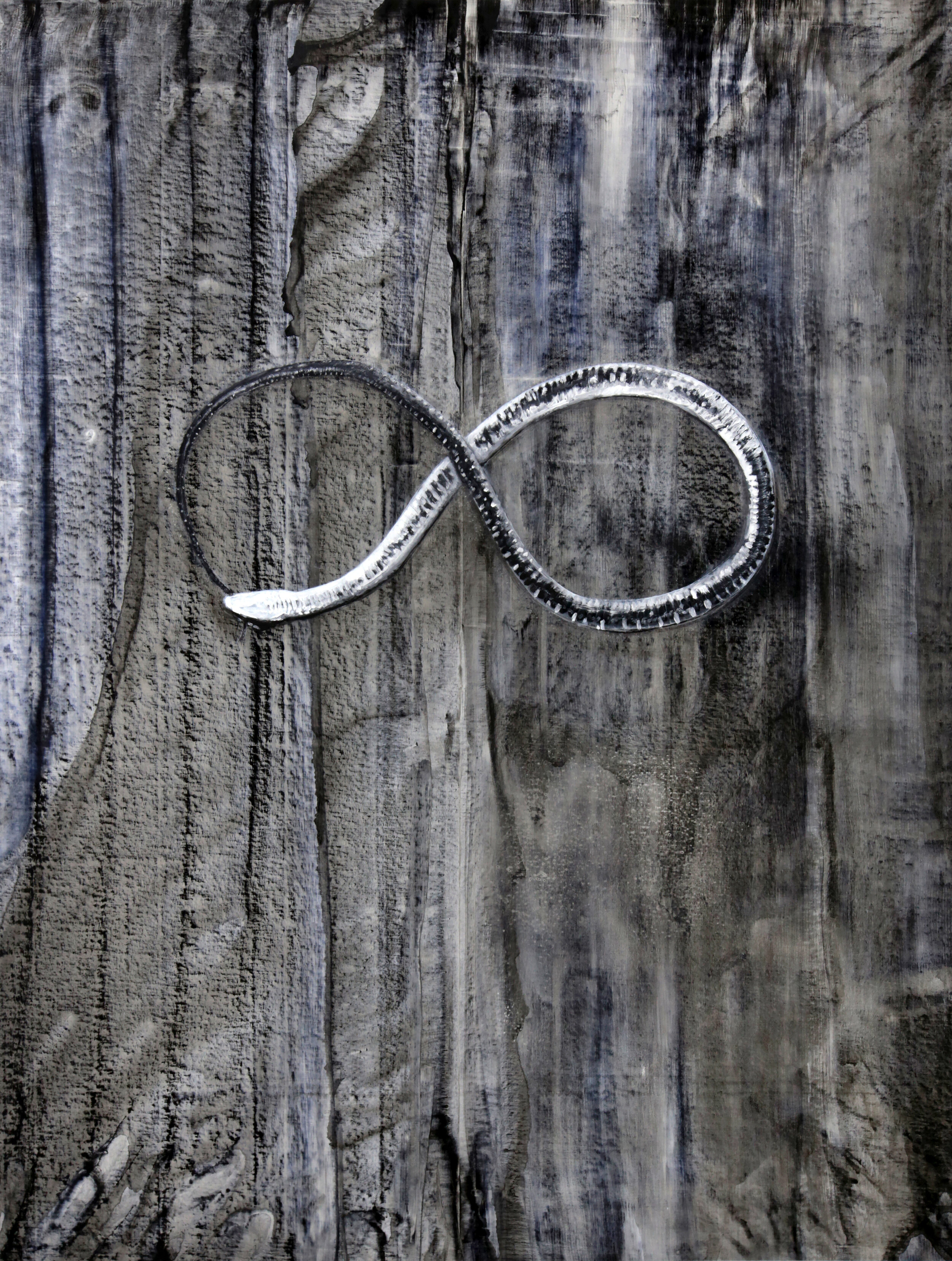
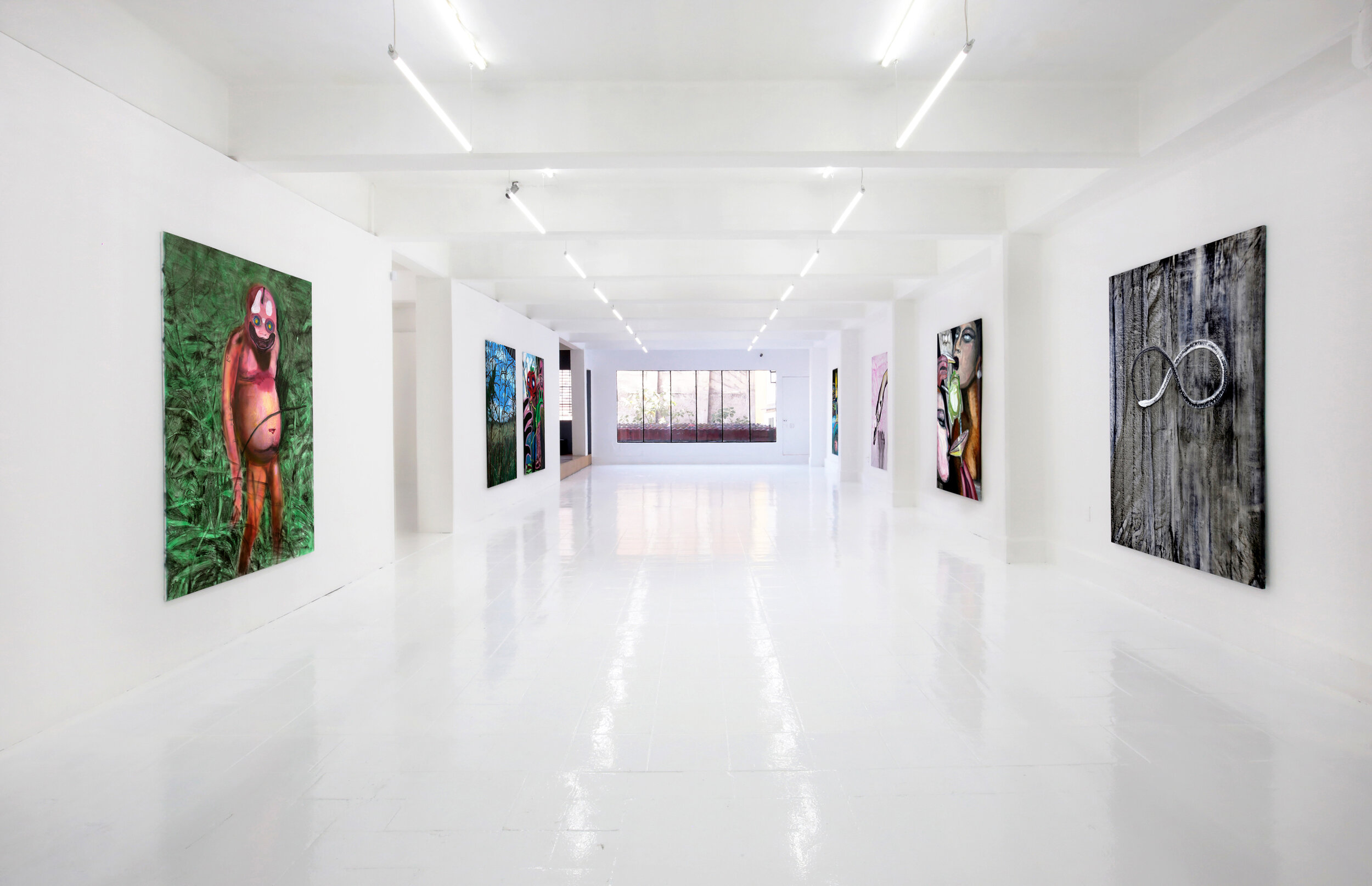
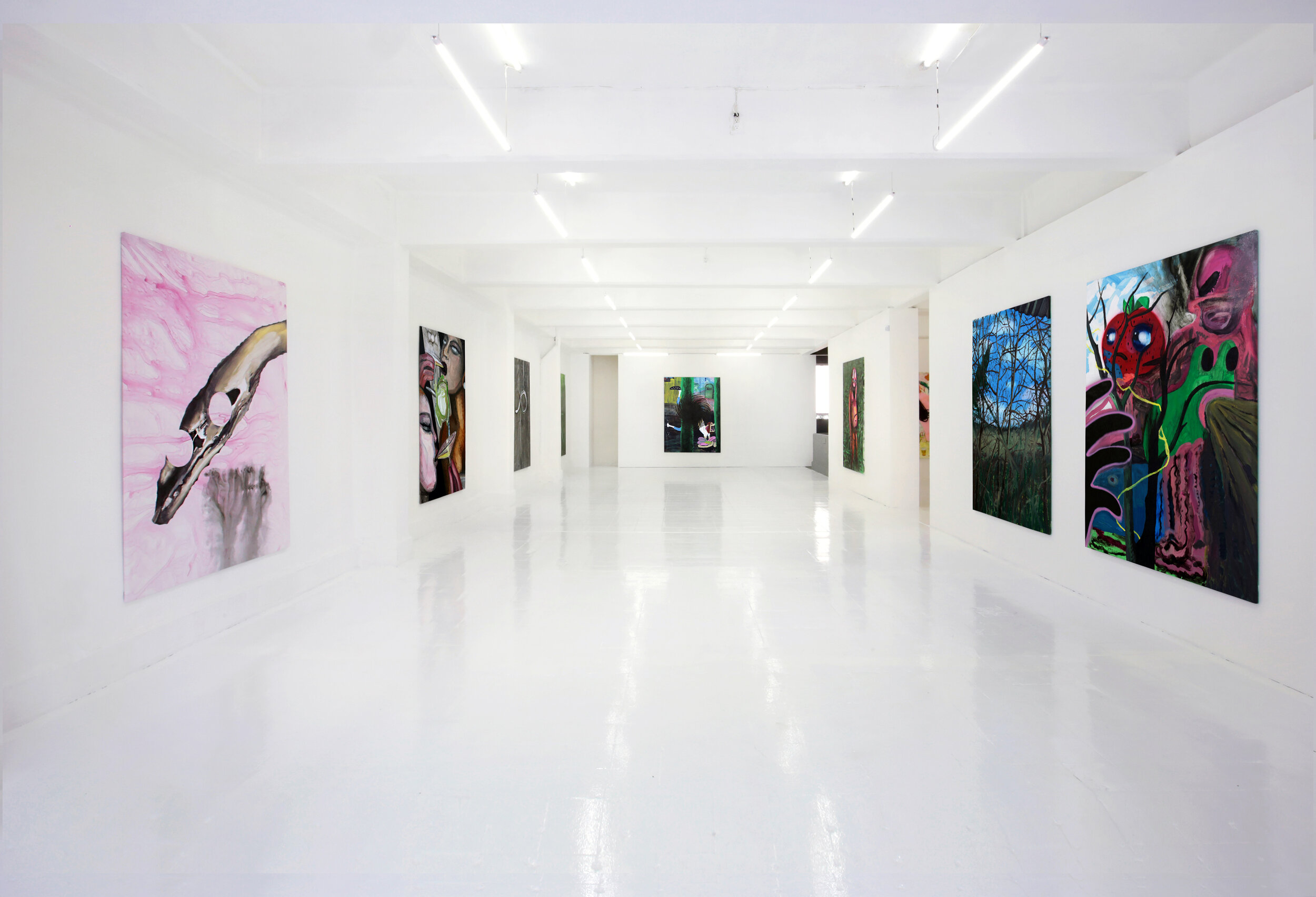
If we say the that surface is palpable, maybe it will be equipped with movements? Thus, the possibility of thinking about a dynamic of the layers of paint arises. In this corpus, a frog wants to jump off the canvas and the mundane, as a social commentary on the relationships between classes, and a nod to the art history. In this vivacity, it shows us its torso, the hiddenness of its body, an unusual vision that reminds us of the frontal interstitium between it and us. In a perhaps more subtle dynamic regarding the different layers, a snake between two molts waits patiently for its skin to be reborn. Are these bodies coming out of the canvas? Or will it be that we break it, glimpsing through a cloudy spiral? As a portal, it gives us access to the last surface, the one of emotions.
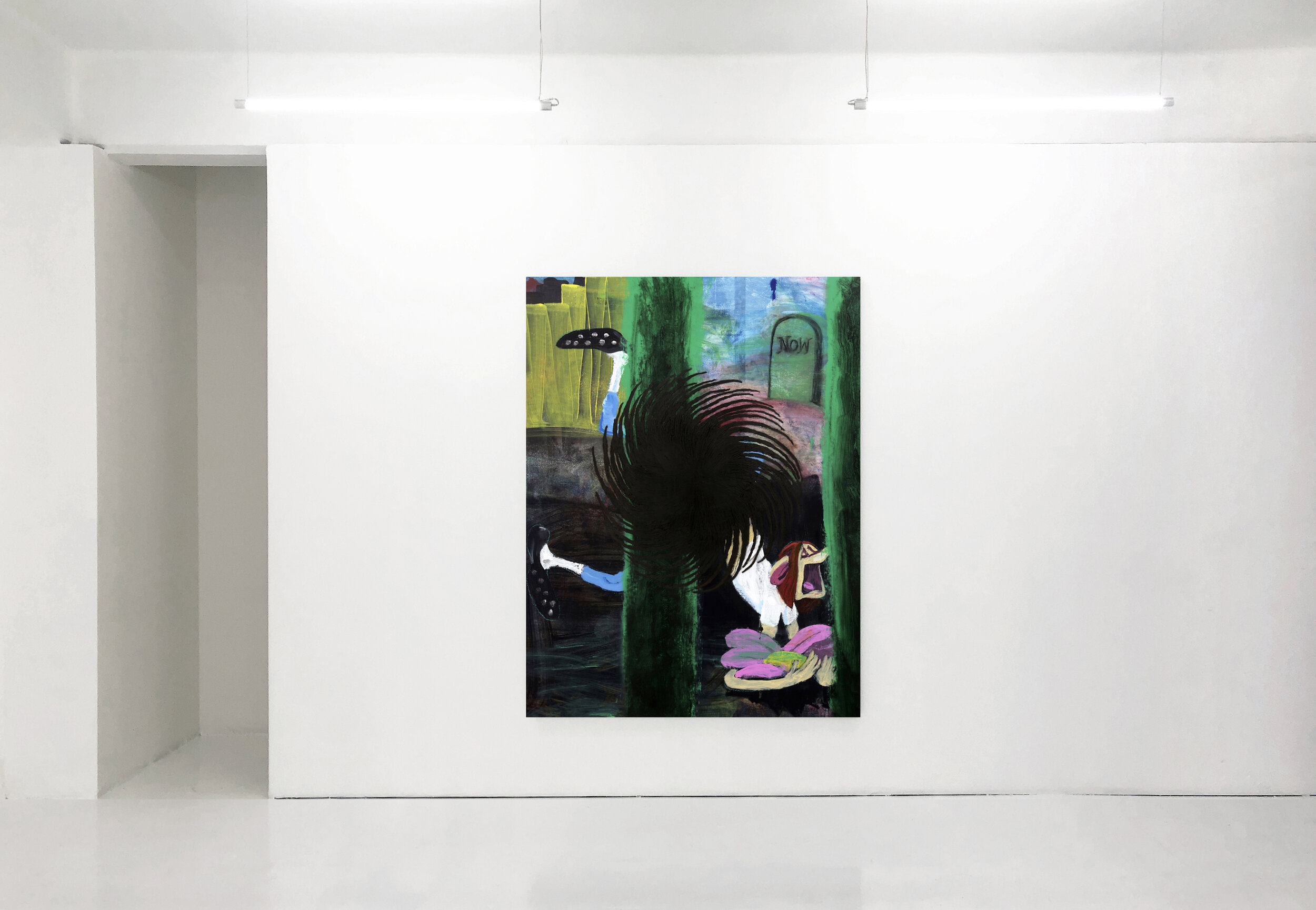
With his unconnected situations and uncomfortable characters, the paintings refer us to folk tales accompanied by the malice that characterize them. In these works, the shadows are perceived as a habitat where all the backgrounds and figures exist seeing us, evoking the ambiguity of the everyday and its strangeness. Other presences, such as textual spectra in an imperceptible movement, age with the skin they tattooed, dilute with water, or gradually disintegrate with the stone that supports them.
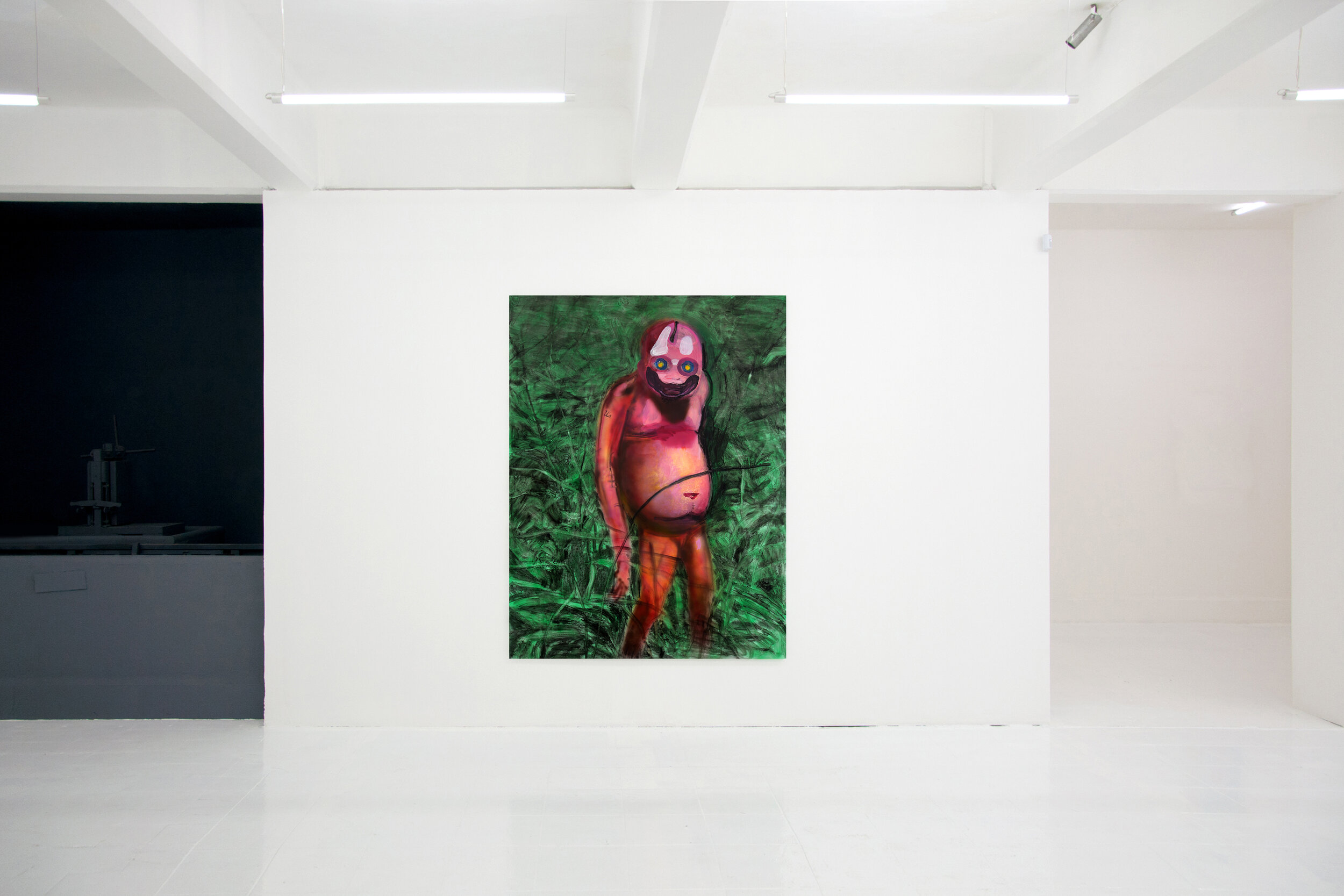
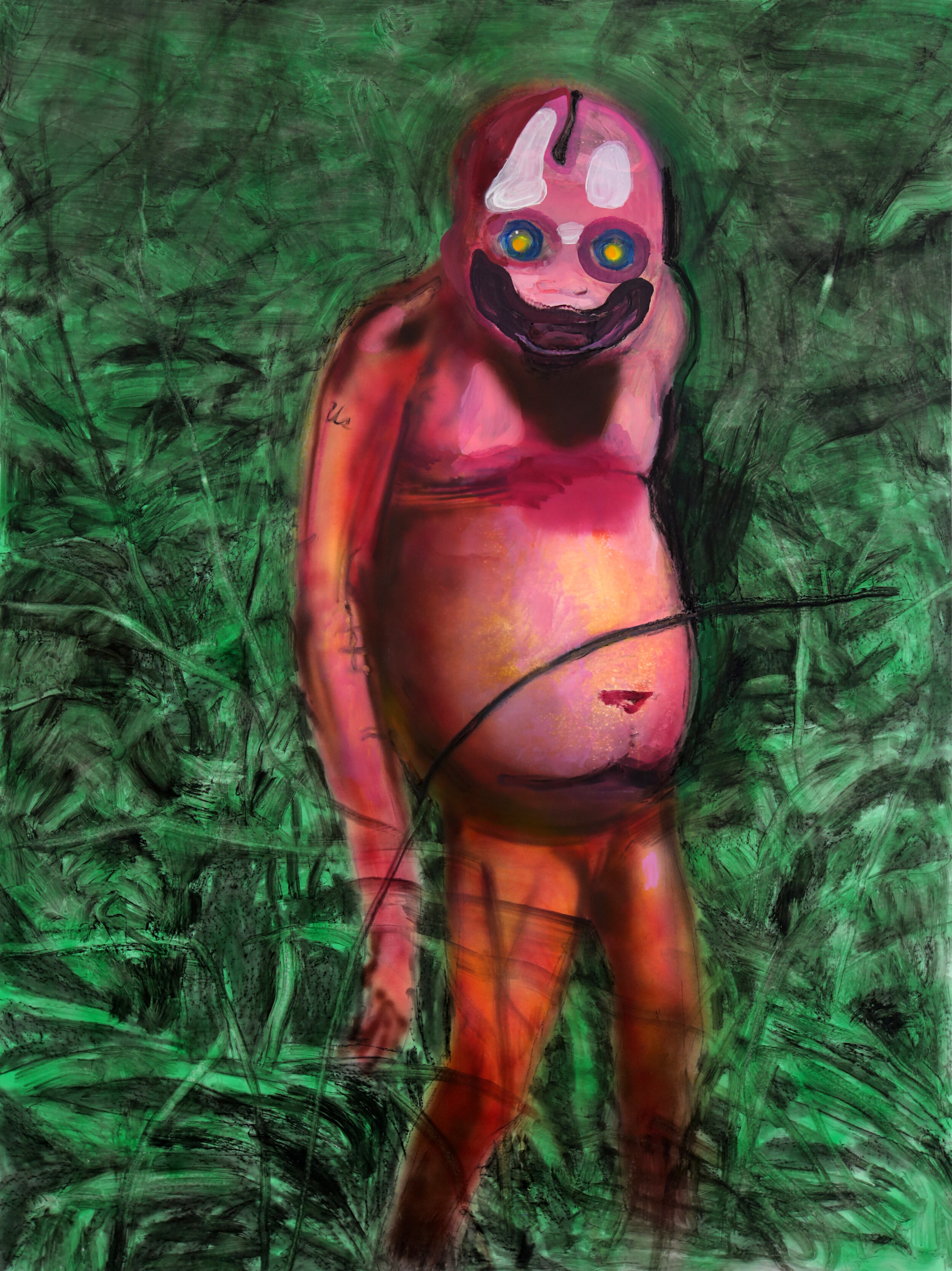
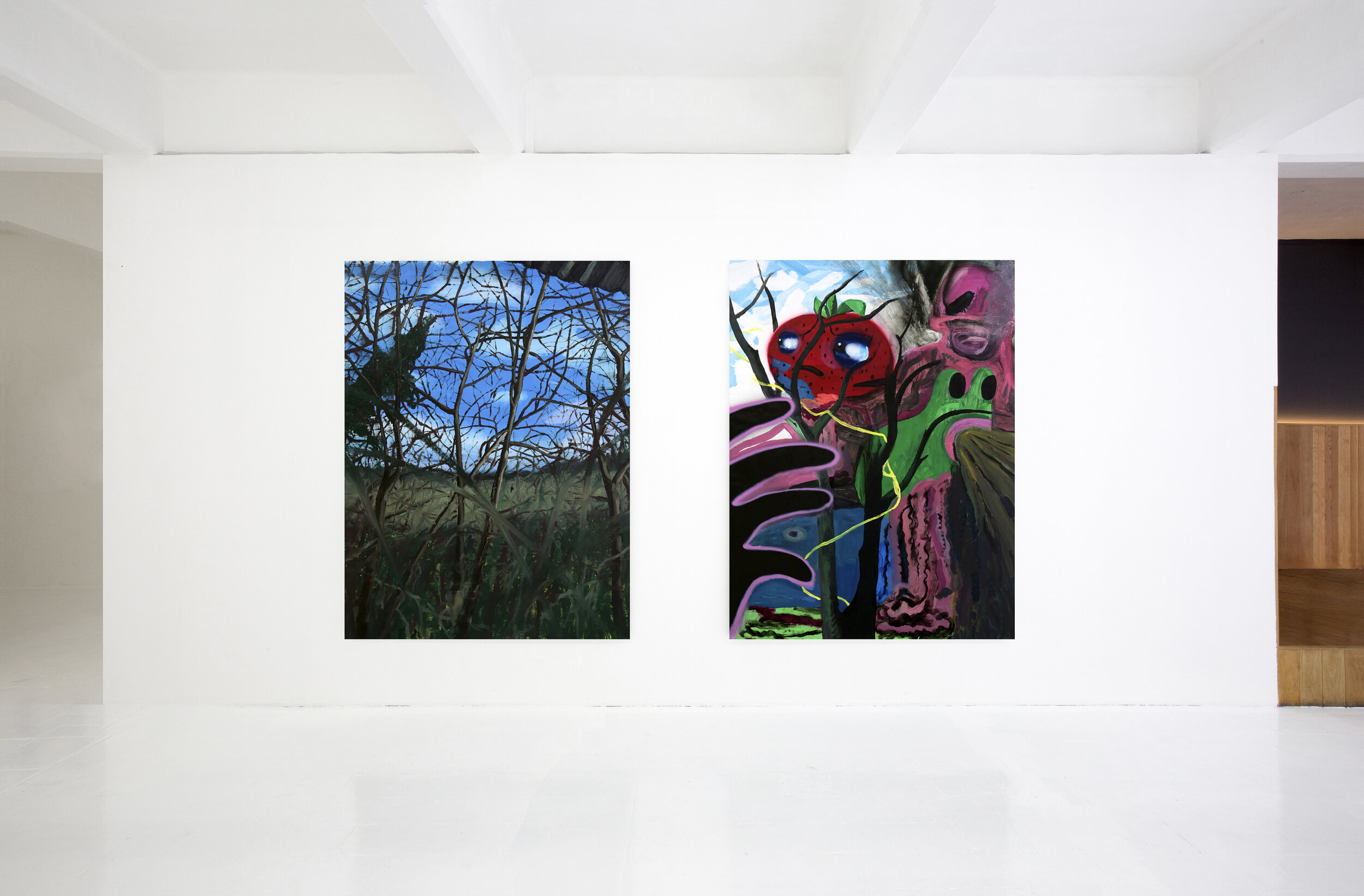
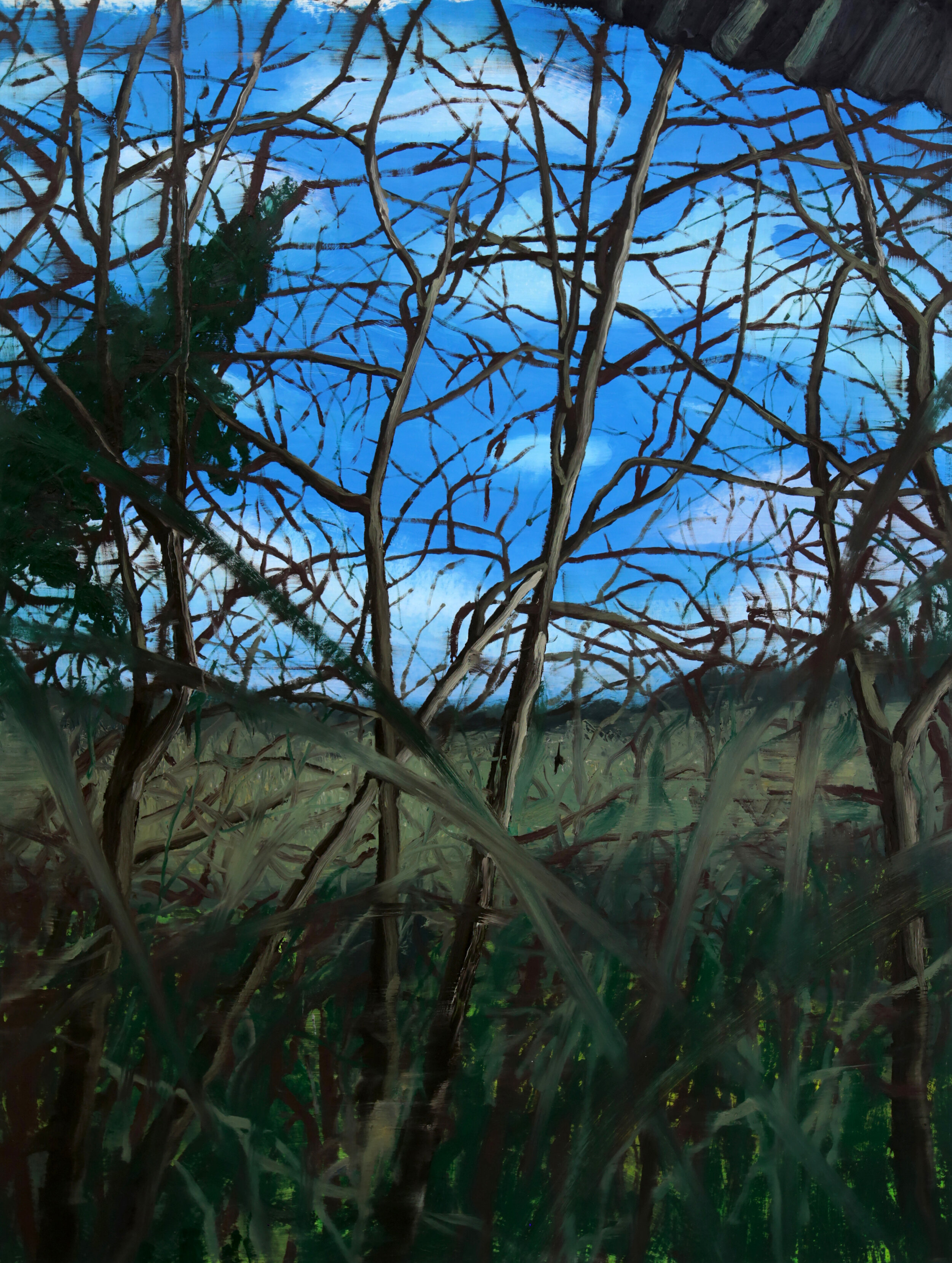
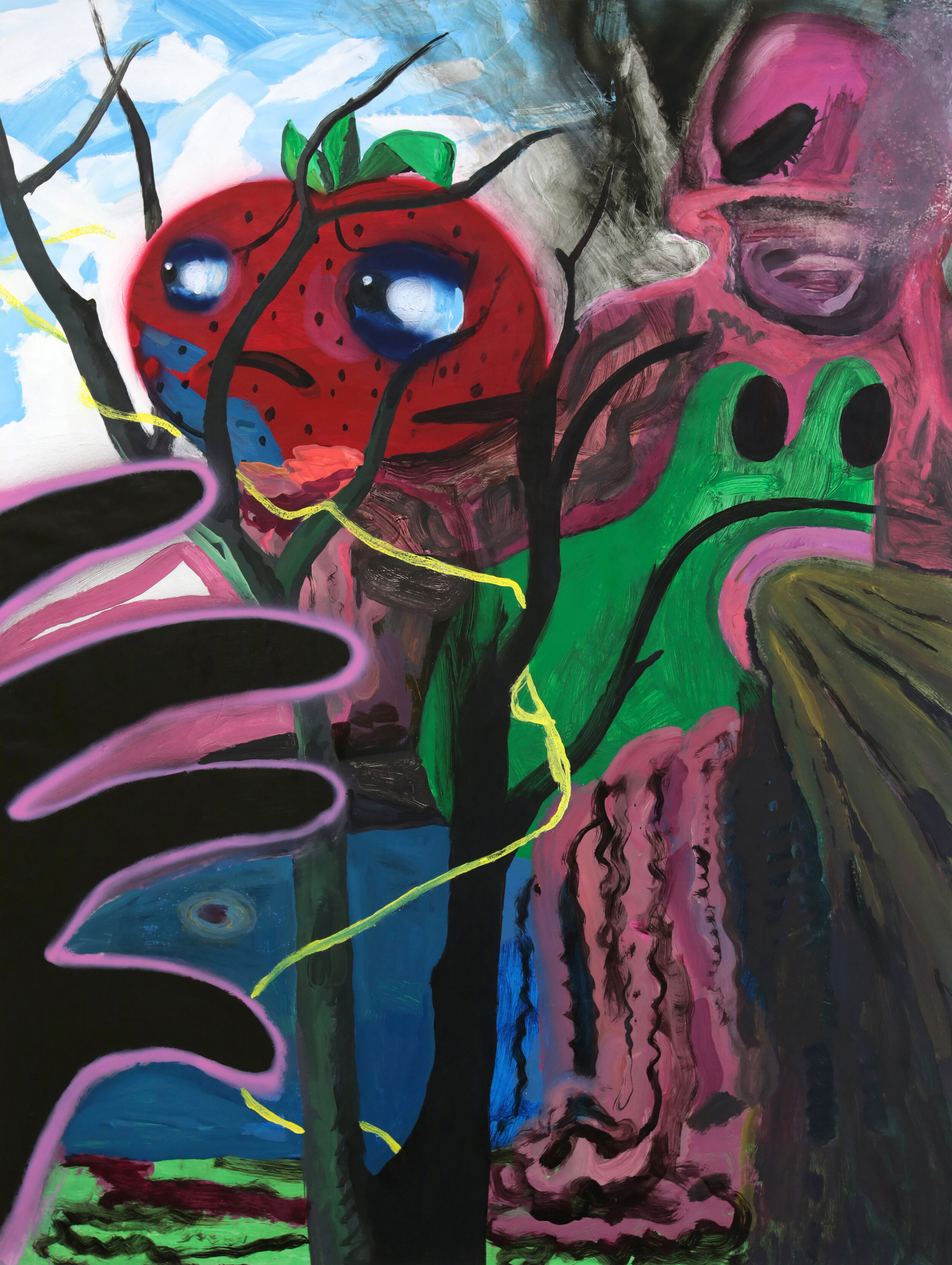
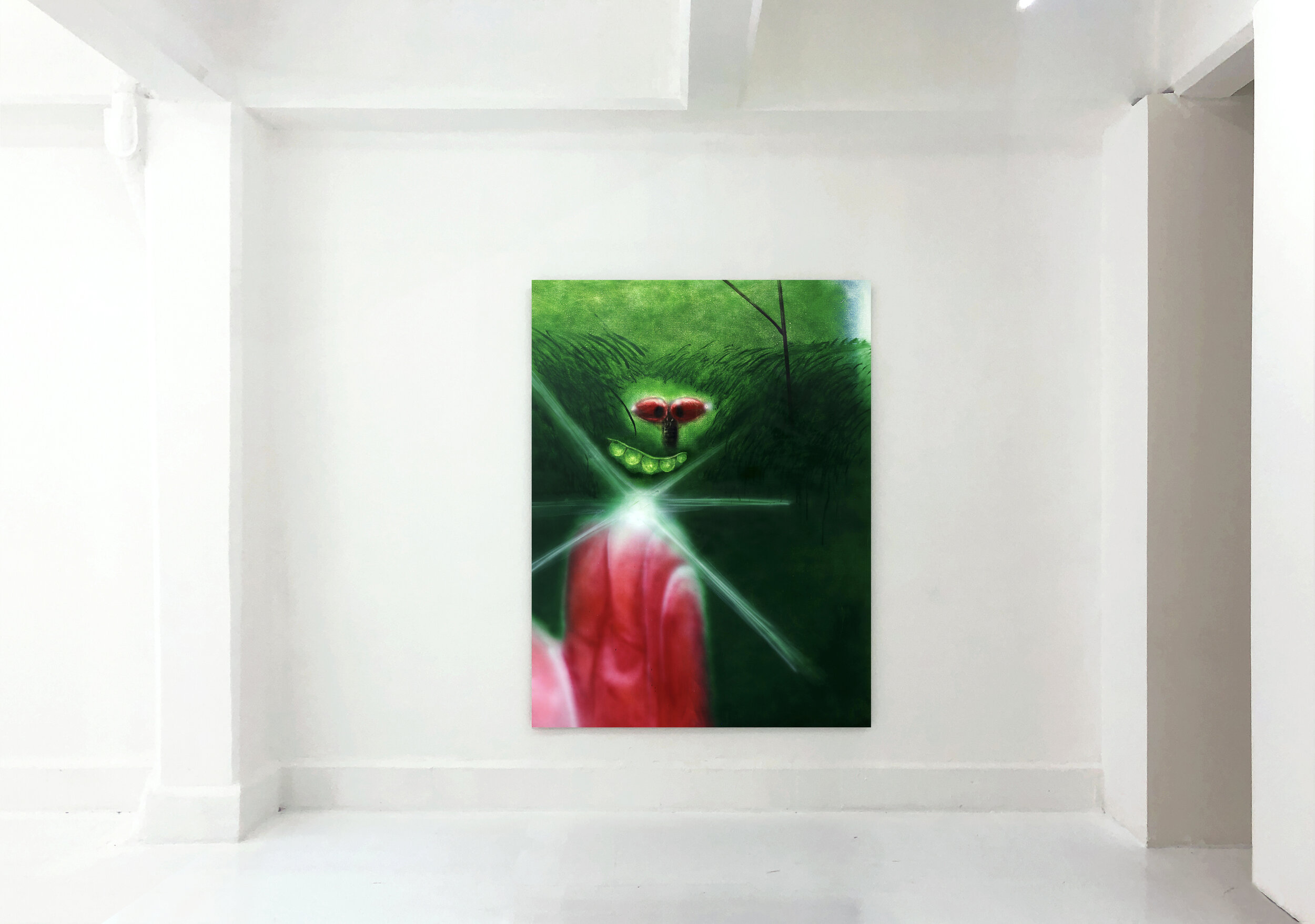
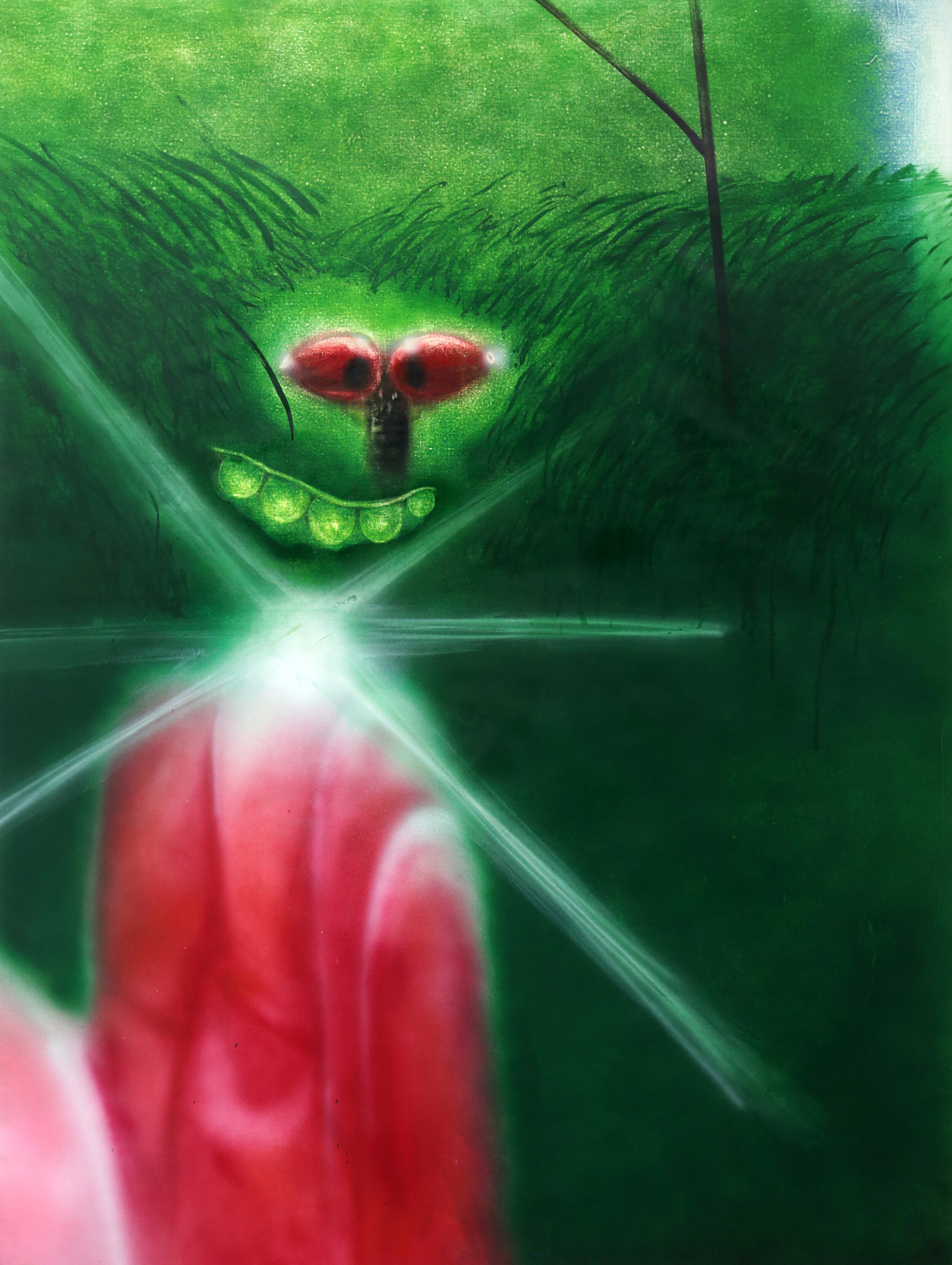
We finally meet several crazy characters: a strawberry between cute and cheater, a man who seems lost in his clumsiness, glamorous ladies, and other figures without identity. Sometimes messengers, sometimes incarnations within his works, we can feel his versatile presence, accompanying his daughter in these adjacent worlds that he is opening. They are not sweet, but they challenge us: either with a magical light, highlighting a green atmosphere where a giant creature hides, or through a lush landscape that promises, perhaps, a peaceful horizon. In these paths, the scales are variable and create a round-trip feeling between each work that raises the question: who guides who?
-Aurélie Vandewynckele